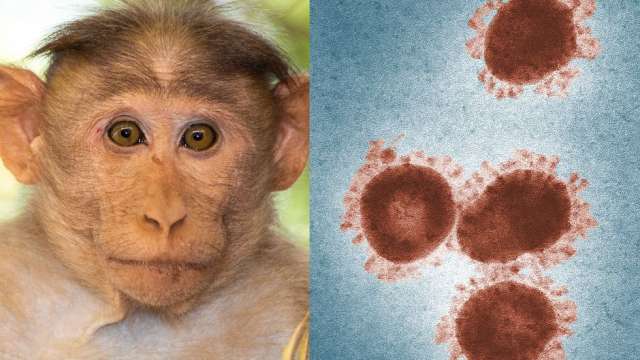
The name Monkeypox virus/disease (Family: Poxviridae, subfamily: chordopoxvirinae, genus: orthopoxvirus) is because it was first isolated and identified in 1958 in monkeys shipped from Singapore to Denmark for research purposes. The virus is 200 -250 nm in size containing linear double-stranded DNA. It is a zoonotic virus incidentally causing disease in humans similar to smallpox with the first confirmed human case in 1970 from a child in Democratic Republic of Congo (DRC). It is endemic to central and western Africa with more cases in DRC, and sporadic clusters and cases outside Africa around the globe in the following years. In recent years there is an upsurge of outbreaks reported globally. As of now (1st Jan 2022 – 25th August 2022) a total of 46,048 laboratory confirmed cases and 15 deaths have been reported from 99 member states in all 6 WHO regions (Africa, Americas, Eastern Mediterranean, European, Western Pacific and South-East Asia). Studies suggests that sudden re-emergence in the last decade after 40 years, attributes to the stoppage of smallpox vaccination program (Showed cross protection against monkeypox) worldwide from 1980 after the eradication of smallpox. At present, two genetically distinct clades Central African clade (case fatality rate around 11%) and West African clade (case fatality rate around 1-3%) have been identified.
Transmission:
Animal to human (zoonotic) – by direct contact with the blood, body fluids, skin lesions and respiratory droplets of infected animals or contaminated fomites, eating undercooked meat and other animal products of infected animals, and exposure to infected animals of people living in or near forest areas.
Human to human transmission – by close or direct physical contact (face to face, skin to skin, mouth to mouth, mouth to skin), sexual contact with infected person, and sharing personal items.
Route of viral entry: oropharynx, nasopharynx or intradermal
Natural reservoir: Not yet been identified but studies suggests that rodents are most likely the natural reservoir.
Incubation period: Interval from infection to onset of symptoms usually occur from 6-13 days but can range from 5-21 days.
Symptoms: Fever, headache, muscle aches and backaches, swollen lymph nodes, chills, exhaustion and rashes (look like pimples /blisters) on face, inside mouth, hands feet chest, and genitals and/or anus.
Laboratory diagnosis:
Monkeypox infection can be detected by isolating virus using culture methods or by conventional/real-time PCR (recommended and most widely used). This is done by extracting DNA from specimens (skin lesions- swabs of lesion surface and or exudate, roofs from more than one lesion or lesion crusts).
Treatment and management:
It is a self-limiting viral disease. At present, there is no specific treatment for monkeypox virus infections. Like most of the viral illnesses, symptom-based management is recommended. Monkey pox and smallpox are genetically similar therefore antiviral drugs and vaccines used to treat smallpox may be used to treat and prevent monkeypox. Tecovirimat is recommended for patients with weak immune system and those who are severe ill.
Prevention:
Avoid close or physical contact with the infected person. Do not touch rash or scabs of infected person. Do not kiss, hug, cuddle or have sex with monkeypox infected person. Do not share personal items. Wash your hands frequently with soap and water or use an alcohol-based hand sanitizer. Isolate the person infected with monkeypox.